Search This Blog

Thursday, November 29, 2012

Cupping Therapy


Massage therapy is the best alternative for medicine. Massage therapy dates back to thousands of years from ancient writing in China, Japan, India, Arabic nations, Egypt, Greece and Rome. In 1850’s two Americans who studied in Sweden introduced massage therapy to the United States, where it became popular due to its variety of health purposes.
Massage therapy is good for people wanting to relieve pain, reduce stress, increase relaxation, rehabilitate sports injuries, address anxiety and depression as well as aid in general wellness.

There are many different examples of massage therapy. The one I’m going to talk to you about is cupping. Cupping is a healing method that was first used in China, Africa, India, Arabia, and Central Europe.
Cupping is used to drain excess fluids and toxins. It brings circulation and blood flow to muscles and tissues. Cupping is an incredible medicine alternative for carpal tunnel syndrome for that reason alone.

The cupping procedure:  Depending on the massage therapist, a gentle message is given to the patent before the cupping procedure to find the knots. The glasses are applied to the skin to create a suction of the underlying skin and soft tissue. The glasses are placed on deep knots.
The technique can be done dry or wet. Wet cupping consists of making additional steps by making tiny cuts in the skin that bleed.  For more information see: http://www.eorthopod.com/content/exploring-the-use-of-cupping-therapy-for-carpal-tunnel-syndrome

People who undergo cupping tend to get bruise spotting on their back as it’s creates blood flow to the knot. It looks worse than it actually is. Bruising levels vary between people as some might have a stronger blood flow. Cupping lasts longer than a regular massage because it digs into the deep tissue with much larger results than deep tissue massage.
Although cupping isn’t for everyone, ask your doctor is this is a good option for you.

Friday, November 23, 2012

Benefits of Turkey


Thanksgiving is a time for appreciating all you have with family and friends over a meal. Most people buy Turkey for Thanksgiving, however some buy other meats. Regardless of what meat you buy, friends and family are gathered for the same common meaning: giving thanks.

Yesterday, I took part in eating a beautiful bird, Turkey! We learned the best way to make a moist bird is to keep it in your fridge (never freeze) or like us, buy it on Wednesday.

A lot of people don’t realize the great benefits that Turkey has on them. Turkey contains:

  • Amino Acid
  • Protein: 32 grams protein in every 4 ounces (1/2 cup)
  • Selenium: healthy function of thyroid and immune system
  • Vitamin B: 36% daily allowance of vitamin B3, 27% daily allowance B6 which helps blood sugar levels
  • Less Saturated Fat: Less than 12% recommended daily allowance of saturated fat per 4-ounce serving
  • Turkey does all this plus aids in cancer prevention.

-> So when you decide what leftovers you want to indulge on, don’t pick pie, pick the Turkey.


Thursday, November 15, 2012

"Diet Soda"

As a marketing major I have seen many different ways companies market products and services, using keywords that make you want to try something. Such as "diet." What do you think when you see this word? Diet? We think we are consuming something better for our bodies but really, it's not as good as we think.

According to the Journal of General Internal Medicine, drinking a single can of diet soda each day can increase your risk of having a heart attack or stroke.

Not only that, diet soda can cause kidney problems. An 11-year long study at Harvard Medical School studied more than 3,000 women finding that diet soda is allocated with an increased risk of kidney decline.

Diet soda also messes up with your metabolism. A study at the University of Minnesoda saw that just one diet soda a day is linked to a 34% higher risk of metabolic syndrom. This includes belly fat and high cholestrol.

Who would think that diet soda can cause obesity? The University of Texas Health Science Center study found that the more diet soda you drink, the greater risk of becoming over weight. The artifical sweeterners can disrupt the body's natural ability to regularte calorie intake.


If you want to learn more about the side effects go to: http://www.prevention.com/food/healthy-eating-tips/diet-soda-bad-you

Saturday, November 10, 2012

Slouching


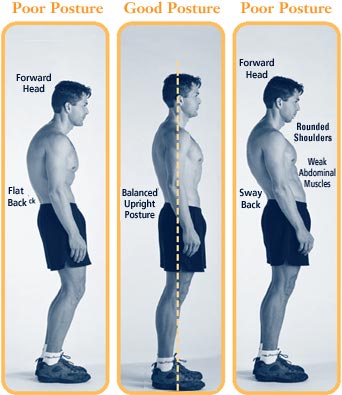
Do you have bad posture where you slouch forward because it's the most comfortable? I sure do.

There are many different exercises us “slouchers” can do to strengthen our back and bring our shoulders forward.


1. Band Pull Apart: strengthen the muscles that lie between your shoulder blades. These muscles are responsible for pulling your shoulders back and holding good posture. Grab a resistance band and raise your arms in front of you with your arms extended and your elbows slightly bent. Pull your arms outward and stretch the band across your chest. Slowly return to the starting point and repeat. This exercise performed using a chest expander device or a resistance band. Perform three to five sets of 12 to 20 repetitions spread throughout your day.

2. Doorway Chest Stretch: A slouch can be result in tight chest muscles, which pulls your shoulders forward. To stretch your chest muscles, stand in a doorway with your forearms resting on the vertical door frame and your elbows level with your shoulders. Stand in a split stance, and push your chest forward and between your arms. Relax as much as you can, and hold this position for 30-60 seconds. Perform this stretch three to five times a day, especially after long periods of sitting.

3. Cobra Stretch: Tight hip flexors and abdominal muscles can pull you forward into a slouched position. The cobra stretch, found in both yoga and pilates, stretching all the muscles on the front of the body will help alleviate a slouch. Lie on your front with your forehead resting on the floor your hands beneath your shoulders and your legs extended. Raise your head and gently extend your arms to lift your upper body off the floor, keep your hips pressed down. Extend your arms as far as feels comfortable, and gently lift your chin up to the ceiling. Hold this position for 30-60 seconds and then relax.

4. Ski Divers: The ski diver strengthens all your back muscles. Stronger back muscles are less prone to the adverse effects of gravity and therefore to slouching. Lie on your front with your forehead resting on the floor and your hands by your side. Rotate your hands outward and squeeze your shoulders back. Contract your butt, press you feet into the floor and lift your head and shoulders off the floor. Hold this position for 20-30 seconds and slowly relax. Perform two to four repetitions.

Reference: www.livestrong.com


These exercises really work!

Saturday, November 3, 2012

Slacking

This past week has been a roller coaster. Not only did I have a lot of projects, homework, and quizzes, but I've been on the search for a job as I'll be graduating in December. Of course, I want to do something that I love. I have always been interested in fitness and nutrition. I'm enjoy giving back to the community as well. I have so many interests and being a marketing major I can go in any direction I want.

On top of looking for a job and homework, I haven't been working out. I didn't work out for 5 days! That's not like me! I needed a little break as I found I wasn't giving 110% in my workout. Everyday that passed I felt worse and worse. I was extremely tired, very hungry and wanted to watch TV all day.

Luckily, I've had the motivation to get back into it. The biggest thing I learned was to never push yourself over the edge of hating something. I learned I can't go without working out more than a week but when needed, I should take a break.


Friday, October 26, 2012

ANTS ON A LOG


Growing up, one of my favorite snacks was “ants on a log.” I never realized the benefits of eating peanut butter, raisins and celery. Here’s why to this day I enjoy making ants on a log:

Celery:
Blood Pressure Reduction
Celery contains a compound called phthalide. These compounds have a relaxing affect on the arteries; in turn, they allow blood to flow at a lower pressure. Phthalides also lower stress hormones and calm the central nervous system, leading to lower blood pressure. A serving of four stalks per day can have a significant impact on blood pressure levels, providing a natural approach to hypertension management.
Rich in Vitamins and Minerals

Celery is very high in potassium, magnesium and calcium; they help support the nervous system and control stress levels. The potassium in celery hearts has a diuretic effect on the body, which helps you maintain proper fluid balance. It’s rich in vitamin C, which supports healthy immune system functions and helps your body fight infections.
Anti-inflammatory properties

Celery hearts offer anti-inflammatory properties that reduce any existing swelling or inflammation, so celery can be used to ease conditions such as rheumatism and gout. The diuretic properties of celery hearts also helps prohibit the build-up of uric acid around the joints, which prevents further inflammation and supports healthy joints function.
Cancer Prevention

The phthalides and polyacetylenes in celery help detoxify the body of carcinogens, or cancer- causing chemicals. If carcinogens build up in your body, you’ll have a higher risk of developing cancer. Eating celery hearts helps rid your body of these harmful chemicals. Celery hearts also contain coumarins, which help support white blood cell functions. Both of these factors contribute to the prevention of various cancers by detoxifying the body and supporting proper immune system functions.

Raisins:

Daily Nutrition
According to the U.S. Department of Agriculture’s Dietary Guidelines for Americans 2010, consuming 2 ½ cups of fruit and vegetables a day helps reduce the risk of heart disease. Raisins qualify as fruits under this dietary recommendation. According to the website FitDay, consuming 100 grams of raisins will allow you to meet 5 percent of your daily calcium needs, 15 percent of your daily iron needs and 16 percent of your recommended daily amount of potassium.
Illness Prevention

According to the website Organic Facts, raisins help ward off several illnesses. The iron in raisins strengthens the body against anemia, and the phenolic phytonutrients help it to resist both viral and bacterial infections. The potassium and magnesium in raisins helps to neutralize excess stomach acid, which can build up and enter the blood stream in a condition known as acidosis. Finally, the fiber content of raisins helps to bind the bile acids in your digestive tract and reduce colon cancer.
Energy

The simple sugars containing in raisins provide a natural source of energy. These sugars are fructose, glucose and sucrose. Mixing nuts with raisins before a workout will provide protein.
Maintaining Your Body

Raisins can keep many parts of your body in good health. They contain oleanolic acid, a phytochemical that helps protect your teeth from cavities and decay. Not only do they contain calcium, which helps maintain strong bones and teeth, but they also contain a micronutrient called boron, which assists with the body’s absorption of calcium. Finally, the phytonutrients in raisins have antioxidant properties, which guard your eyes against macular degeneration and the weakening of vision that comes with age.

Peanut Butter

Cholesterol
Most of the fats contained in peanut butter are monounsaturated fats (MUFA), which lower “bad” cholesterol (low-density lipids) and raise high-density lipids (HDL), the “good” cholesterol, according to the Mayo Clinic. MUFAs found in peanut butter improve anti-inflammatory abilities in HDL.

Diabetes
According to research by the Harvard School of Public Health, published in the “Journal of the American Medical Association,” peanut butter helps significantly reduce the risk of developing type 2 diabetes. Eating an ounce of peanut butter, five times per week, help decrease the risk of developing this serious disease by as much as 27 percent.

Fiber
Peanut butter is high dietary fiber, which reduces instances of colorectal cancer and regulates body sugar and cholesterol. Fiber also helps prevent atherosclerosis, which leads to hardening of the arteries.
Vitamins & Minerals

Peanut butter is about 24 percent protein by weight, and is a good source of Vitamins E and B6, iron, folate, niacin, magnesium, phosphorous, potassium, zinc, manganese and calcium. Niacin plays an important function in the secretion of sexual hormones, and the “Journal of Neurology, Neurosurgery & Psychiatry” reported that niacin provides protection against Alzhiemer’s.
Gallstones

A Nurse’s Health Study found that women who ate at least 1 oz. of nuts or peanut butter each week decreased gallstone development by 25 percent compared to those women who did not eat nuts.
*Taken directly from livestrong.com

How to Make Ants on a Log

2 raw celery stalks
½ cup of peanut butter
15 raisins

Wash your celery stalks, dry and cut in half. Take a knife or spoon to scoop peanut butter along the celery. Add raisins to the top. Enjoy!  


Saturday, October 20, 2012

Dreaming Out Loud


Have you ever had a dream where you didn't want to wake up because it was better than reality? You hope next time you go to bed, you dream the same dream or one that's even better. Rather than living vicariously through these dreams, we have the power to control our reality and make them possible.

On February 9, 2012 I wrote a post entitled "never say: what if". What and if are two words in the English dictionary that when they stand alone they mean nothing, but when you put them together they have the power to haunt you for the rest of your life. It’s more important to live a life of "oh wells than "what ifs."
 
No matter what your dreams are, don’t be afraid to chase them, if you fall behind

You may find yourself stumbling into something even better.